
remedies
15 Apple Cider Vinegar Uses for Health and Home
Discover 15 practical uses for apple cider vinegar — from digestive support to natural cleaning, hair care, and skincare. What actually works and what doesn't.
Read more →
Conventional all-purpose cleaners contain a mix of synthetic chemicals that work well but aren’t necessary for most everyday cleaning tasks. The ingredients they rely on — primarily surfactants (to lift grease and dirt), acids or bases (to break down residue), and biocides (to kill bacteria) — all have natural equivalents that perform admirably for typical household surfaces.
Here’s a DIY all-purpose cleaner that’s genuinely effective, costs pennies per bottle, and uses ingredients you likely already have.
White vinegar-based all-purpose cleaner:
Mix in a spray bottle. That’s it.
White vinegar is acidic (pH around 2.4), which makes it effective at dissolving mineral deposits, cutting through soap scum, and killing many bacteria and viruses. It’s not a registered disinfectant under EPA standards, but it significantly reduces surface bacterial load with contact time of several minutes.
For scent: tea tree oil has mild antimicrobial properties and a clean smell. Lavender, lemon, or eucalyptus work well. Or skip the essential oils entirely.
Good for:
Not suitable for:
For cutting through grease and food residue, add a small amount of castile soap:
Castile soap is made from plant oils (typically olive, coconut, and hemp oil), biodegradable, and an effective surfactant. This formula works on greasy surfaces where vinegar alone isn’t sufficient.
Important: Don’t combine castile soap and vinegar in the same bottle. Vinegar is acidic; castile soap is alkaline. They neutralize each other, producing a curd-like residue that is ineffective and unpleasant. Use them as separate cleaners for different purposes.
For surfaces that need more scrubbing power (baked-on oven residue, stained grout, bath rings):
Apply to surface, let sit 5 minutes, scrub with a stiff brush, rinse. Baking soda is a mild abrasive that lifts residue mechanically without scratching most surfaces. The alkalinity helps dissolve grease.
DIY cleaners require slightly more attention to technique than spray-and-wipe commercial products:
Contact time matters. Spray, let sit 30–60 seconds, then wipe. This is true of natural and commercial cleaners alike — the active ingredients need time to work.
Use the right cloth. Microfiber cloths make a significant difference. They mechanically lift and trap bacteria and residue through their structure, rather than just moving it around. Paired with a simple cleaner, a good microfiber cloth outperforms a cheap cloth with an expensive cleaner.
Don’t over-dilute. The formulas above are already relatively dilute. For oily surfaces or heavier soil, use the cleaner full-strength rather than diluting further.
Glass spray bottles are preferable for cleaners containing essential oils, which can degrade some plastics over time. Recycled glass spray bottles work fine — clean an old cleaner bottle thoroughly and reuse it.
Label your bottles clearly with contents and date. Vinegar-based cleaners keep indefinitely. Castile soap formulas are best used within a few weeks (without preservatives, there’s some risk of microbial growth in water-based formulas over time).
A liter of white vinegar costs about $1–2. A 32oz spray bottle of commercial all-purpose cleaner typically costs $3–6. The DIY formula produces the same volume for a small fraction of the cost, without the synthetic fragrance, dyes, or surfactants that come in most commercial products.
The ingredients are also multi-purpose: white vinegar cleans windows, descales the kettle, and rinses fabric softener out of laundry. You’re buying a versatile household staple rather than a single-purpose product.
remedies
Discover 15 practical uses for apple cider vinegar — from digestive support to natural cleaning, hair care, and skincare. What actually works and what doesn't.
Read more →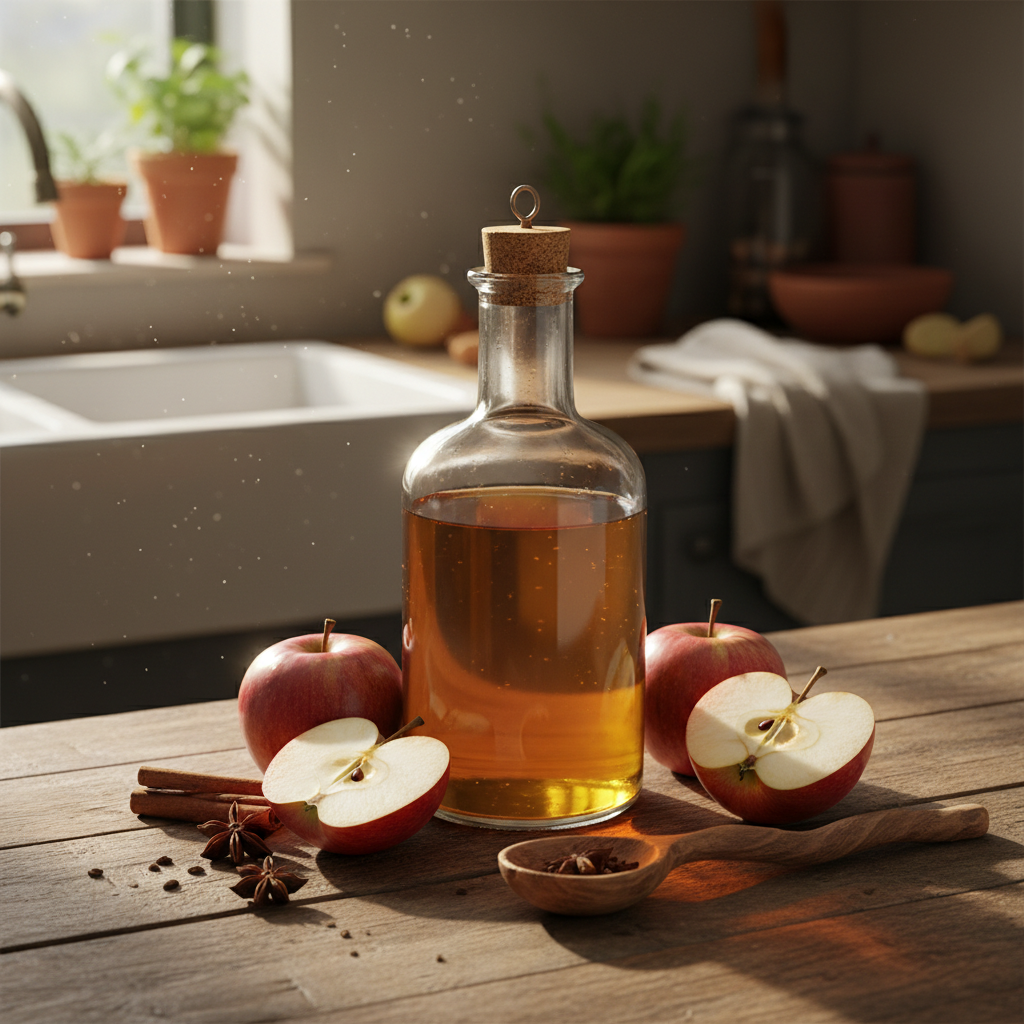
remedies
Discover 15 practical uses for apple cider vinegar — from digestive support to natural cleaning, hair care, and skincare. What actually works and what doesn't.
Read more →
remedies
A practical guide to four essential oils for sleep — lavender, cedarwood, bergamot, and vetiver — with the research behind each and how to use them via diffuser, roll-on, and bath.
Read more →